Wednesday, September 28, 2011

THE MILKHOUSE


So, even though I spend a considerable amount of time in the barn each week, I realize I still haven’t gone into great detail as to what goes on within its walls. I’m still milking twice a week (now Monday nights and Wednesday mornings) and have barn chores (mucking stalls, fluffing bedding, emptying the drop, feeding) on Wednesday mornings and then whenever someone needs a cover in the evenings. We have mechanized milking units, but milk by hand if a cow needs a teat stripped due to a mastitis infection, so I’m getting a bit of practice with that as well.


A bit about our dairy:

Our milk is certified organic. Our cows are let out to pasture in between milkings and any grass they graze is supplemented with organic hay and grain to boost their diet and milk production. We sell our milk to Organic Valley and while they are required to pasteurize it be

fore distribution to the public all the milk that we consume on site is whole and unpasteurized. It is illegal to sell unpasteurized milk in the state of Wisconsin, so this is only for personal consumption. Our cows are milked twice a day, at 5:30 AM and PM. Currently, we have approximately 30 milkers and another 40 dry cows, including calves and expectant mothers. Cows are usually dried off two months before calving (they are all artificially inseminated, which is another fun story) and once the calf is born it is separated from the mother and she returns to being milked twice a day. All of our calves are bottle-fed. Male calves are sold (for meat, etc.), but we keep the females and they eventually join our milkers after being bred a few years down the line. Cows in a small-scale organic dairy such as ours usually live 15-plus years, giving milk until the end. The average life span for a factory-raised dairy cow is only 2-3 years.


What else… We have four milk machines and it usually takes (me) about two hours to milk all thirty cows if you include set-up and clean-up. Other, more experienced milkers probably only one and a half. Before and after attaching the machine to the cows’ teats we spray them with iodine and wipe them down to prevent both contamination of the milk and infection of their udders. The milk travels up the hoses, through the piping and into our bulk tank, where it is stored and cooled until Organic Valley comes and picks in up, every 3rd day. The cows are much better mannered in the mornings after a good night’s sleep. Also, in the evenings they are fed as they are being milked, thereby losing any modicum of manners they may have possessed. They move a lot more and are less hesitant about lifting a hoof, so you have to be on your toes.

Friedo, one of the founding members of Community Homestead, is in charge of the barn. He’s from Germany and a very thorough and meticulous teacher. The first few weeks I milked exclusively with him, but now I milk on Wednesday’s with Ryan as well. I do chores with Bruce, Dustin and Steve, three of our life sharers; this involves helping keep them on track and moving them onto the next task while working alongside them.


The hours may not be the most convenient, but I’m finally starting to get a hang of everything and I really do enjoy being with the cows. Additionally, there are a plethora of friendly barn cats that hang around waiting for you to spill milk or throw an errant scratch their way.


Wednesday, September 21, 2011

UPDATE


So, since my mother will not stop badgering me about writing another entry, I've decided to acquiesce. This entry is going to be picture heavy and we’ll start by going back to two weekends ago, I’ll do my best to remember everything…


This weekend was “Wheels and Wings”, one of the town festivals in Osceola highlighted by old car parades, air shows, and the infamous truck-pull. Friday night we went with a van-full of people to the truck-pull, not really my cup of tea, but a cultural experience in and of itself. However, we were out until 10:30, way past my bedtime.


The next day after Saturday morning harvest I set off for Phillips, WI, a two and half hour drive East of Osceola. My friend Libby was having a going away party with family an

d friends at her dad’s cabin before road tripping cross-country to California to try her hand as an amateur filmmaker. That night we had a bonfire and grilled out. Sunday after a hearty breakfast and some time reading out in the sun we set off on a kayaking adventure. Because of the lack of rain recently the river that runs by their house was too low to kayak so we drove just under an hour to the Flambeau River, which hosts Level 1 and 2 rapids (the easiest). We had a leisurely three-hour kayak trip down river and then ended the weekend with dinner before driving back to Osceola. Libby and her friend Emily followed me home and stayed

the night in order to see the community and help out with the morning harvest before continuing West. All in all, a very fun weekend.


Fast forward to this past weekend (as everything tends to blur together and I can’t remember many details from this past week). Saturday afternoon Tina, another AmeriCorps intern, organized a little hike to Interstate State Park, which lies on the border of Minnesota and Wisconsin and is divided by the St. Croix River. It was a very nice, easy hike with great views and lots of glacialpotholes. We also saw lots of kayakers and rock climbers. We finished up our hike with a walk to the local coffee shop in Taylors Falls, where Tina worked in high school.


Sunday, Oscar’s parents had a lamb roast at their straw-bale timber-frame DIY house in Spring Valley. They have a hobby farm where they raise meat sheep and tend a small garden. They had a lovely gathering of family and friends and lots of delicious food despite the fact that it rained the whole time.


Other highlights of the week include the first hard frost, which induced a night of frantic harvesting and crop covering, the birth of two more calves, and Julian getting chickenpox. We have also had an influx of school groups come to stay a few days at a time. One was a 3rd grade class from a Waldorf school in Minneapolis and the other is a senior class from the Avalon school. We’ve put them to work harvesting, processing and doing other odd jobs around the farm. The younger kids were especially fun and I got to spend an afternoon making more grape juice with them. Additionally, this Tuesday we had one of the longest afternoons to date in the packing shed getting the CSA boxes ready.


Wednesday, September 7, 2011

HELLO FALL!

Fall is finally upon us, marked with the season’s first frost, the mowing over of the cornfield, Labor Day, and the start of school for all the kids around here. We also started the squash and apple harvest and the pigs went off to slaughter – mmmmm, bacon!


Monday morning we were greeted with darkness and cold during our 6 AM harvest and everyone kept warm by bundling up and carrying steaming cups of coffee through the fields. And while we didn’t have the whole day off, Labor Day was celebrated with some down time and festivities.


First thing in the morning we got word of a cow giving birth in the barn and made it there in time to see the calf emerging and the cow being a good mama, licking her baby and encouraging him to stand up. (Sorry, I didn’t have my camera with me.) Right now the barn is over-run with calves, with two born on Saturday, and another five in the past two weeks or so, which means I get to add bottle feeding to my list of barn chores.


We got the afternoon off and celebrated with a Labor Day potluck at the community center, the highlights being copious amounts of watermelon and an attempt at making grape juice with some of the kids. I say attempt because ¾ths of the way through the grape pressing Sam, an adorable two-year-old, stepped on the juice bowl, tipping all the contents. Luckily, most everyone found this funny and there was still enough juice left for everyone to have a sampling.


Besides that, not a whole lot is new around here. I’ve finally gotten over my constant exhaustion and slipped into the rhythm of things. Oh, and, I never thought I’d say it again, but here it comes, AmeriCorps Round TWO! I’ve asked and been accepted as an AmeriCorps intern on the farm for the year. Technically, this changes nothing, as my role is still the same. But I’ll be here longer, earn a small stipend and get an education award to put toward grad school at the end of my term. It also means that I’ll have more time to participate in other activities in the community, such as baking bread and working in the wood shop and integrate myself more completely into community life.


WISH ME LUCK!

Friday, September 2, 2011

FARM FACTS

Here's a splattering of interesting tidbits that you may or may not know about life on a farm...


1. A cucumber has spines - yikes!

2. Don’t cut towards yourself with a machete, you will get hurt…

3. Cantaloupe is best right off the vine

4. If you want to milk cows, YES, you have to get up at an ungodly hour

5. Pigs don’t sweat – hence the rolling in mud to keep cool

6. Corn fields are filled with mosquitoes, especially at 6 in the morning


I’ll be adding to this list as my time here progresses and I promise to update you all with something more substantial, probably later this weekend.

Monday, August 29, 2011

RECAP WEEK 1

I’m sorry to say this entry may be a bit dry, but I’m sure some of you must be wondering how I’ve been spending my days here. So I present you with a day-by-day account of my first week on the farm:


Monday: Harvest Day!

6-8:30am Washing greens (baby kale, arugula, mizuna, mustard, spinach, and large curly kale)

8:30-9am Picnic breakfast in the field

9-12 Out in the fields harvesting peppers, lettuce and cucumbers

12-2pm Lunch at Morning Glory (e.g. my house)

2-5 Harvested beets and beans

5-6 Dinner

6-8 Washing up, relaxing and socializing

8 Watched an episode of Black Adder with everyone in the house

9 Bedtime

Tuesday: Harvest Day Round 2 (not necessarily the norm :)

6-8 Picked sweet corn in the rain in a field of mosquitoes

8-9 Breakfast (we harvested our own raspberries)

9-12 Picked tomatoes in the fields and the greenhouse

12-2 Lunch of aforementioned tomatoes and eggs from our chickens

2-5 Processing (e.g. putting what we’ve picked the past two days into CSA boxes that are delivered to customers tomorrow)

5-9 The evening followed much as the following day, but we played Apples to Apples instead of watching a show


Wednesday

7 Woke up, had breakfast, got ready

8-12 Harvested the last of the ripe tomatoes, removed dead/bad leaves from beds of Swiss chard

12-2 Surprise going away party for Kristine (one of the Germans) and Marianna, who’s moving to Madison to start school after living on the farm for two years

2-5 Picked onions and weeded some tomato beds

5-8 Ate dinner, played cards, went to bed early


Thursday

7 Up and at ‘em

8-12 Planted seed flats of lettuce and kohlrabi

12-2 Community lunch with everyone in the comm

unity center

2-5 Thinning mo

re Swiss chard in the garden

5-6 Dinner

6-8 Painting aprons for kindergartners with Christine

8-10 Watched a movie and bedtime


Friday: First day of milking!

5 Wake up (it is still pitch black out)

5:30-8:30 Milking in

the barn

9:30-12 Out in the fields after breakfast harvesting potatoes

12-2 Lunch

2-5 Weeding and hoeing the side garden

5-7 Downtime

7-8 Community potluck at the community center followed by a short cello performance by Arianna, a 9 yr old

9 Bed!


Saturday

5 Wake up

5:30-8:30 Milking – I got to bottle fee

d the calf

that was born last night :)

9:30-12 Out in the garden weeding one of the tomato beds and thinning Swiss chard

12-2 Lunch, laundry

2-4 Bike ride into town (~5 miles) to get a coffee and check out the library with three of the other girls that intern here

5-8 Head to the Franconia Sculpture Garden to listen to live music and look at the artwork

9-11 Try to figure out my plans for after the farm… Bedtime


Sunday: SLEEP IN!!!

7 Sleeping in was a failure, woke up unfortunately early, read in bed

11 Brunch of crepes with homemade apple-strawberry jam

1:30-4 Played tennis with Asher, Lilli, Johanna, Steven and Scott

5 Dinner

7-8:30 Played cards with Mary

9 Bed


Riveting, I’m sure, but actually quite a fun and learning-filled week. I’m really enjoying my time here, the people are great, and after a week am really getting into the swing of things. I’ll write back soon with something a little more exciting to read. CIAO.

Sunday, August 21, 2011

BIENVENUES A LA FERME!


So after almost a year of inactivity during my AmeriCorps “sabbatical” (that was anything but relaxing) I have decided to resume my blogging activities. This time, instead of fish, the topic shall be farming. Yesterday I arrived at Community Homestead, a non-profit rural community that lives and works with people with special needs. My main duties for the next three months will focus mainly on gardening and milking, but I will also have the opportunity to try other things such as canning, making yogurt and baking bread.


So far, so good. I am living in Morning Glory, one of six houses on the farm, with the Elmquist family (they have four children, all but one that are out of the house), a German girl who is here for the summer, and four long-term residents. I have my own room, which after this past year is a dealmaker in and of itself. And the house has a resident cat, Kit-Kat, who is very sweet but is all skin-and-bones due to a case of intestinal worms that he is being treated for later this week. There are a plethora of other animals running around as well – mainly just dogs and cats, but chickens, too.


As for food, we have fresh, unpasteurized milk from their 30 dairy cows, completely organic. Most of the produce comes from the garden and orchards, but otherwise each house operates on a monthly budget for food and other household needs. To earn money, Community Homestead has a CSA and sells woodcrafts, fiber arts and anything else the residents produce. No one here has a salary and all money is communal.


This morning (Sunday) we attended the “Gathering”, which is a very informal version of church, if it can even be called that. Anyone from the community is welcome to attend, but it is not mandatory. We sat around in a circle, a few passages were read (not necessarily from the Bible), we sang a few songs (that change depending on the season), and then people just visited. All in all in took about 30 minutes.


This evening we went down to the river for a picnic dinner and some swimming. I’ll update everyone on the day-to-day runnings of the farm when I get more accustomed to the schedule. So far, all I know is that Mondays we start bright and early at 6am to start the week’s harvest! Otherwise, starting times each day are a bit more flexible.


A TOUT A L’HEURE!

Thursday, September 2, 2010

Kiss Me, I'm Spawning!


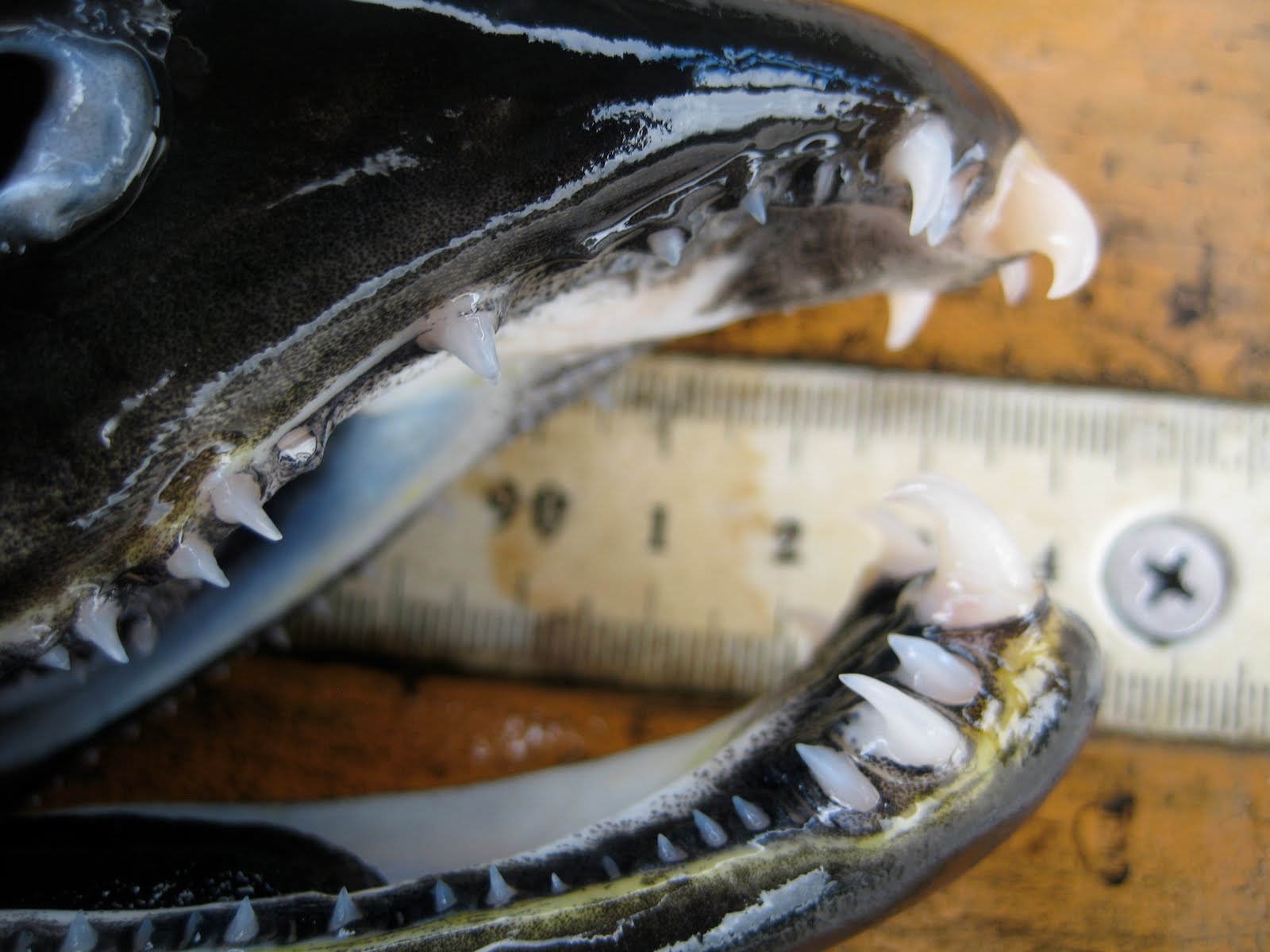
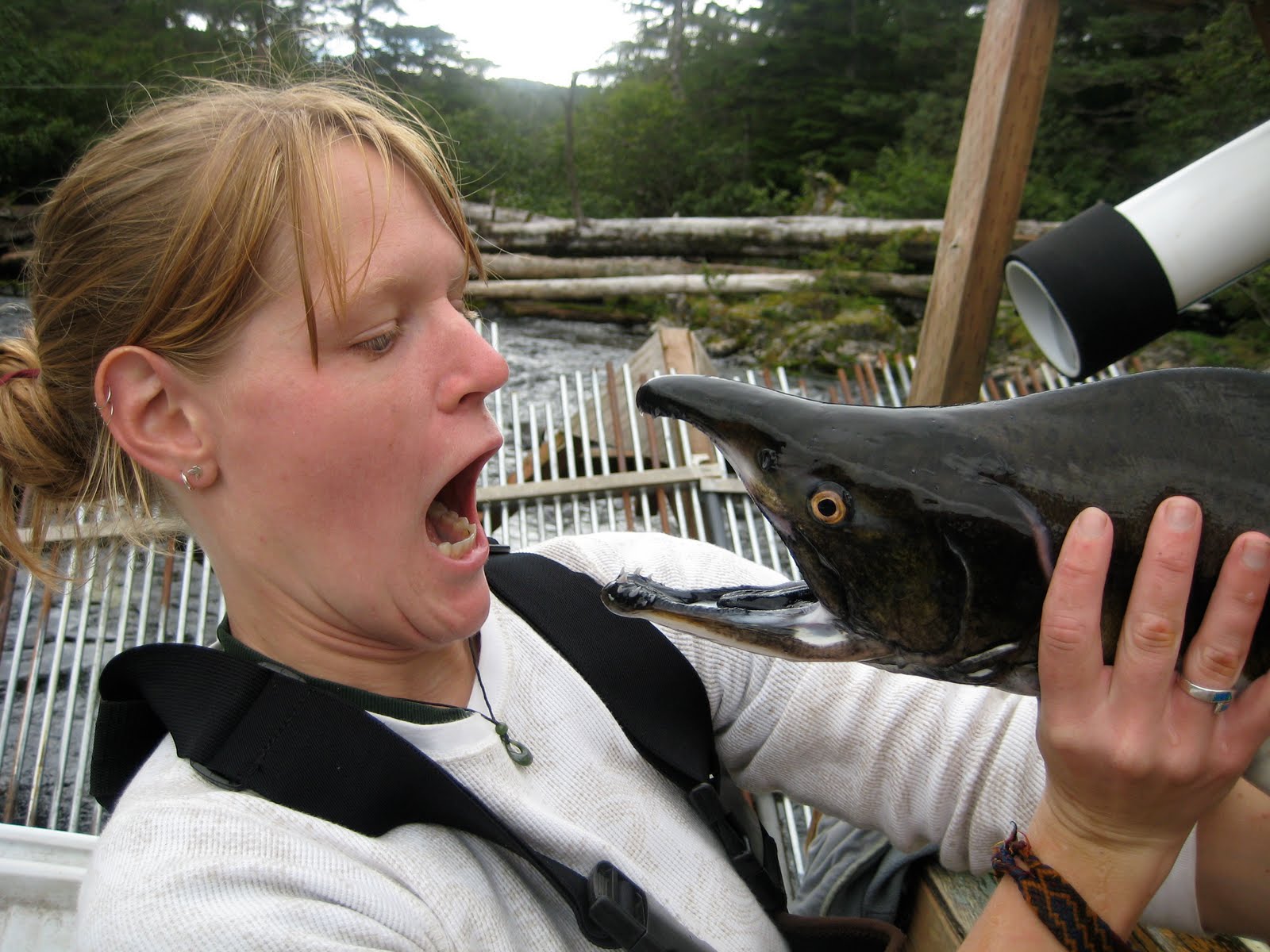
It has finally happened, the fish have changed into their spawning physiques, e.g. enlarged noses, jaws, teeth, humped backs (in pinks), and color changes. Once they enter freshwater the salmon stop feeding and literally survive by eating themselves alive (calorie stores in fat, scales, etc.), so as the season progresses they can start looking pretty gross. And of course, once they spawn, they die. I’ve been trying to get pictures of every species as they come through the weir, so I’ll share with you what I have so far – there may be more pictures to come.

Sockeye:

Both males and females turn bright red. I think they’re the prettiest. The bright red color (of both their meat and their scales when they’re spawning) is probably why they’re also called “reds”.


Chum:

Get very stripy and have huge teeth! They’re our biggest salmon species in Redoubt and they look super cool, especially when you go snorkeling with them.


Pink:

The males get huge humps (thus the nickname “humpies”) and they kind of just get gross. Unfortunately, because the net weir is blocking quick migration out into the lake some of the pinks have even started spawning on the sandbags reinforcing the weir. Although, it is fun to watch the males fight each other.


Coho:

I don’t really have any good pictures of spawning coho, but as they start to lose their scales their backs take on a “goldschlagger” look.

Coho "jack" (underdeveloped male)