Monday, February 10, 2014

The Collines: come climb (and bike) us!


Ascending road in Savalou, 12km from Logozohe
Kyle and me on our maiden voyage to Minniki

 I am very lucky to have been placed in, what I think, is one of the most beautiful parts of Benin.  Full of rolling hills and mountains, it provides lots of opportunities for outdoor adventure.  We also have the most moderate climate – not as stickily humid as down south, and not as ungodly hot as up north.  This is facilitated by the fact that we are one of the sole countries provided bikes – score!  I’ve taken advantage of this by trying to get out and visit (by bike) the surrounding villages/towns as much as possible.  A few of us volunteers also went for a last minute camp-out on top of one of the collines the other month (an experience that was only very slightly diminished by the fact that I was hit with a bout of explosive diarrhea right as we reached the top, props to Caitlin for having brought some Kleenex along).  In this spirit, here are a few photos to commemorate the beauty of the Collines.

Picturesque break point

Collines!

Sunset on top of the colline outside Minniki during our camping trip


Kyle trying to start a fire

Zem, Caitlin's backpacking pooch

We survived the night!

Watch out for bear traps!

Fellow EAer, Caitlin
The descent


Saturday, February 8, 2014

Tchou kou ce die: Meet Mathilde

Mid October


I would like to present a very special addition to my life, Mathilde (i.e. Matilda), my puppy!  She is approximately three months old and I bought her for the equivalent of three U.S. dollars (i.e. 1500 cfa).  She is everything I could have hoped for and more.  After only three days she follows me around everywhere, accompanying me partout: the office, the clinic, the garden.  And, she is already better behaved than Spot (for those of you who knew him) ever was in all his sixteen years.  She is a typical medium-sized Beninese street dog (mutt of the basenji breed) except that instead of the boring beige you usually see she has the coloring typical of a beagle (black, red/tan, and white).  I had originally wanted to get a male dog since neutering them is fairly easy and non-invasive, but she was so pretty I just couldn’t pass her up.  As of now she still has a little flea problem (not that that deters me from having her join me in bed) even after multiple baths, but I have concocted a homemade pest repellent from lemon juice, eucalyptus leaves and garlic that is helping keep them at bay until I can find a more permanent solution.

La Beninoise avec une Beninoise


She has also become somewhat of a “dog ambassador” here in Logozohè.  There are, of course, dogs everywhere, but very few of them are socialized or well cared for, so they tend to get a bad rap and are seen as pests.  So you can imagine that Mathilde, makeshift leash and all, and her yovo (i.e. me) make a pretty interesting sight walking down the street.  Reactions we get are everything from “What a pretty dog!” to “I can’t believe you let that thing near you,” but, in general, people seem to appreciate her.  I also give impromptu nutrition classes when people ask me what I feed her to make her look so healthy.

Mathilde loves children!

Getting bigger!

She has also given me a good excuse to go for daily walks around town and practice my local language skills.  See the following:

            Tchou kou ce                        My dog
            E nƆ nyi Mathilde                 Her name is Mathilde
            E do atƆn                              She is three months old
            Mi gosin glege                      We just came from the fields
            Mi xhe xhe bureau               We are going to the office
            E wa ni wevi                          She likes fish

Impressive, I know.  I also talk to her in a ridiculous mélange of English, French, and Fon – Dios mio!

By best friend, Anthonia (i.e. Tanti Mathilde)

When it comes to her diet, she eats what I eat, although anyone will tell you that I’m more concerned with her protein and nutrient intake than my own.  Eggs, fish, moringa powder, soy cheese (i.e. tofu), she always gets the biggest portions.  And now, whenever anyone has me over to eat, they have to invite Mathilde, too.


Mathilde's big sister, Qui sait l'avenir (Who knows the future)
Note: I wrote this post about three months ago.  Mathilde is now 6 months old and is no longer a baby, as she just went into heat for the first time (yay puppy period blood!).  After searching in vain for birth control shots, I finally found them – because lord knows I don’t need to have 6 puppies running around.  However, whether or not I got it to her in time has yet to be seen…  We’ll know in a few weeks as soon as her teats start coming in!  Things are still going well.  We’ve made lots of puppy friends around village and we’ve started running together in the mornings.  While having a dog is definitely a big responsibility and limits my ability to travel freely and regularly visit other volunteers, I can’t imagine life without her.

Settling in at post: Logozohè

Mid-September
   
Men hard at work making sobadi in the woods (think palm moonshine)
Grandma

Rice fields

We have arrived at post!  I have been placed in Logozohè, a village of (if local estimates are correct) about 6,000 people (not counting the surrounding villages) in the Collines department (see central Benin).  While fully expecting to be “roughing it” here in Africa, I have ended up in relatively luxurious digs.  I do not have running water, but I do have electricity, a well and a rain-fed cistern right outside my door, and an indoor (bucket) shower room (i.e. a hole in the floor).  I am also situated conveniently between Dassa and Savalou, two medium-sized (by Benin standards) cities.  And, the collines (hills) are beautiful – I can’t wait to get out and do some hiking.
Women's soccer team
Each volunteer is placed with a supervisor and a counterpart to help facilitate their integration and, hopefully, their work as well.  My supervisor is the CA (chef d’arrondissement) of Logozohè and my homologue, a seamstress, is one of his four wives.  While neither of them are directly involved with the agricultural/environmental work I will be doing here they are definitely well connected and have been very welcoming.  So far my days are pretty loosely organized and consist of me walking around village and getting to know people.  I have an in-depth étude de milieu (community assessment) due in December that requires me to find out as much about Logozohè as possible, both its strengths and weaknesses.  If done well, it will provide a strong base on which to conduct all of my future work.  It is also a good excuse to get out and about and learn more about where I will be spending the next two years.  As I move along in the process I will be sure to post any interesting tidbits I learn.

Anthonia and me, one of my first night's in village

Papa Tchou kou tou (best maker of fermented millet beer)

Woman rolling out kooli kooli (peanut paste snacks)

Helping kids look at the sun during the solar eclipse
My neighbor Angel and her daughter Astride

Fete outside the king's palace

Rita, my homologue, and out mud stove
My friend, Poncelle, and her daughter Caline
---------------------------------------------------

Fast forward 3 months (since I’m so behind on posting!): So, post-Etude de Milieu, what have I learned about my community?  Well, let me tell you!

  • The local language is Mahi (a derivative of Fon)
  • The current population is 6,320
  • Logozohè was founded in 1769 by Aditi TCHAOU, the second king of Savalou
  • The name Logozohè means tortoise (logozo) and bird (he) in Mahi and its emblem is just that, a bird sitting on the back of a tortoise
  • Logozohè has two public schools and three private schools and many children from surrounding villages come here to attend the secondary schools, as smaller villages usually don’t have any
  • 90% of Logozohè’s population participates in subsistence agriculture activities (more on this later)
  • The village market is every 4 days and you can find everything from shoes and clothing to dried fish and vegetables to live animals and school supplies
  • The biggest challenges include water scarcity and lack of employment opportunities
  • Environmentally, deforestation and a Chinese factory located on the river are the biggest challenges.  The factory specifically is killing the fish and polluting the water by dumping all of its wastes into the river – hello, lack of environmental regulations!
 
    Chinese factory
    Slaughtering of a cow for a local ceremony
I learned many other interesting facts about Logozohè , but those will have to wait for their own posts.

Thursday, October 3, 2013

PST: Missérété

July-September


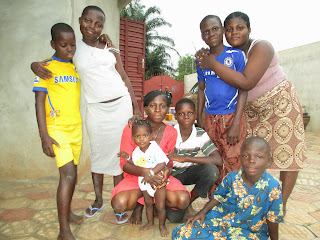
My host siblings
PST (pre-service training) was a whirlwind.  My sector, environmental action (EA), was placed in Missérété, a small town outside of Porto-Novo in southeastern Benin.  Living with host families, the twelve of us were kept busy 8-5 Monday through Friday, and even half a day on Saturdays.  Our days were filled with language, culture and technical trainings, and our nights and weekends with family life.  Amongst the things I learned during PST include how to cook pâte (imagine corn flour play dough) and sauce gumbo (a gelatinous okra sauce), how to do my laundry à la main (one load usually takes me an hour and a half), and Fon, one of the most widely spoken local languages. 
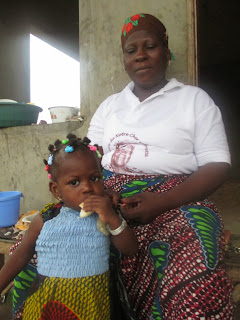
Maman Josette and my little sister, Guenelle

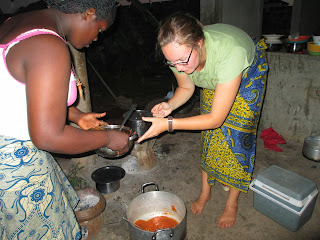
Learning how to make sauce


My host brother, Claude


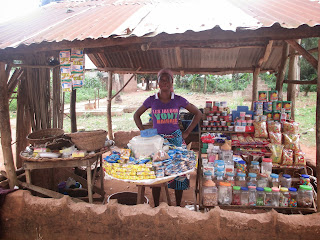
A Beninese "grocery store"

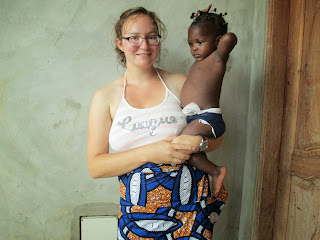
Guenelle and me


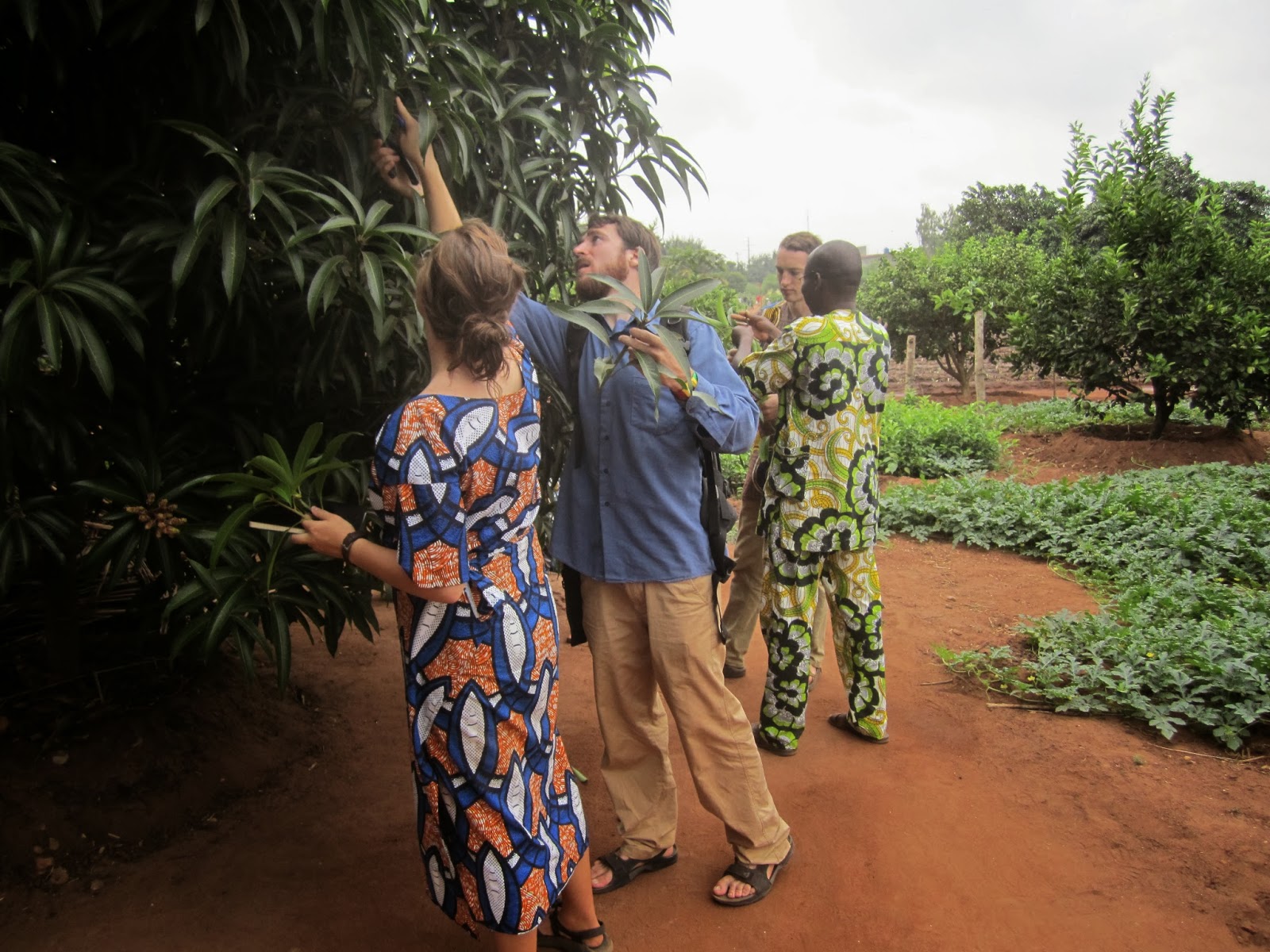
Learning how to graft mangoes
Tech training was by far the most enjoyable: we started our own gardens, built mud stoves, made compost piles, learned how graft fruit trees, and got to work with gardeners in the area.  We also started putting into practice participatory development skills such as seasonal calendars and community mapping.  I was also introduced to polygamy, vodun (voodoo), and the sweltering African sun.  Furthermore, we had the opportunity to spend the first two weeks of August at our permanent sites in order to scope out our future communities and learn more about our roles the next two years – more on that later.
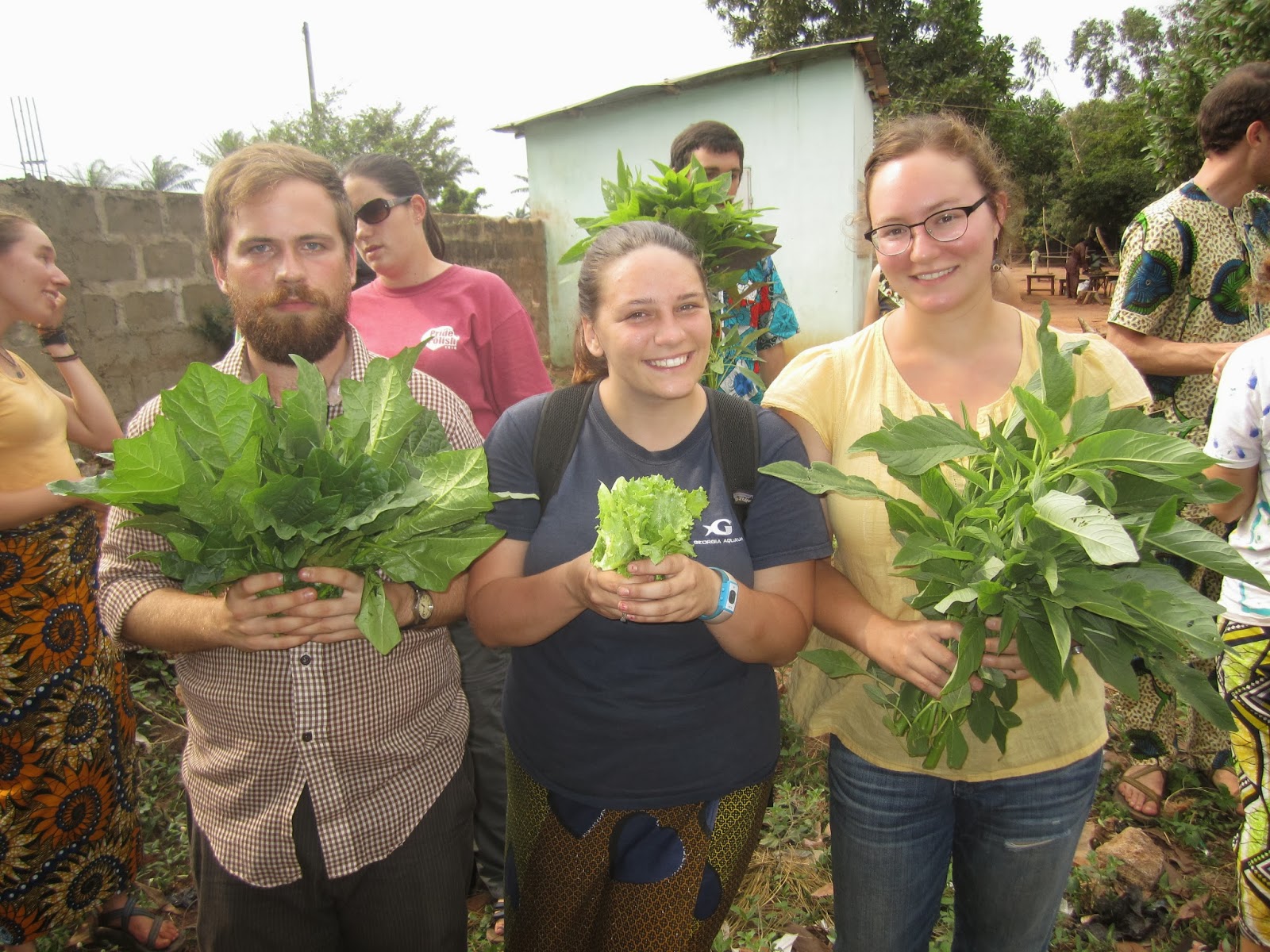

Amaranth from our garden

 A little note on EA: our main goals include increasing food security, reforestation efforts and environmental education.  Based on these objectives, our main activities include gardening, small animal husbandry (rabbits, chickens, goats), tree planting and environmental clubs at local schools.  Also, I feel fortunate to be part of such a great group of EA volunteers and trainers.


The EA gang and our first mud stove